Foundational Knowledge
Foundational knowledge refers to the essential skills and understanding children need by the end of Key Stage 1 to succeed as they move into later learning. It includes the building blocks that help pupils make sense of new ideas, grow in confidence, and access a broad and ambitious curriculum.
What Foundational Knowledge Includes
- Literacy and language: Early reading fluency, secure phonics knowledge, growing vocabulary, and the ability to express ideas clearly in writing. These skills allow children to communicate effectively and engage with learning across all subjects.
- Numeracy: Confidence with number facts, simple calculations, and early problem‑solving. These foundations help children tackle more complex mathematical ideas in Key Stage 2.
- Knowledge of the world: Early scientific understanding, awareness of people and communities, and general knowledge that supports wider learning.
- Personal development: Social, emotional, and physical skills, including the ability to focus, remember key information, and adapt to new situations.
Why Foundational Knowledge Matters
Strong early literacy and numeracy skills have a lasting impact on children’s academic progress and overall well‑being. Research consistently shows that secure foundations in the early years are linked to later success, including outcomes such as the Year 1 phonics screening check and wider reading and maths achievement. When children have these essential building blocks in place, they are better equipped to access the full curriculum in Key Stage 2 and beyond.
Embedding Foundational Knowledge across the school
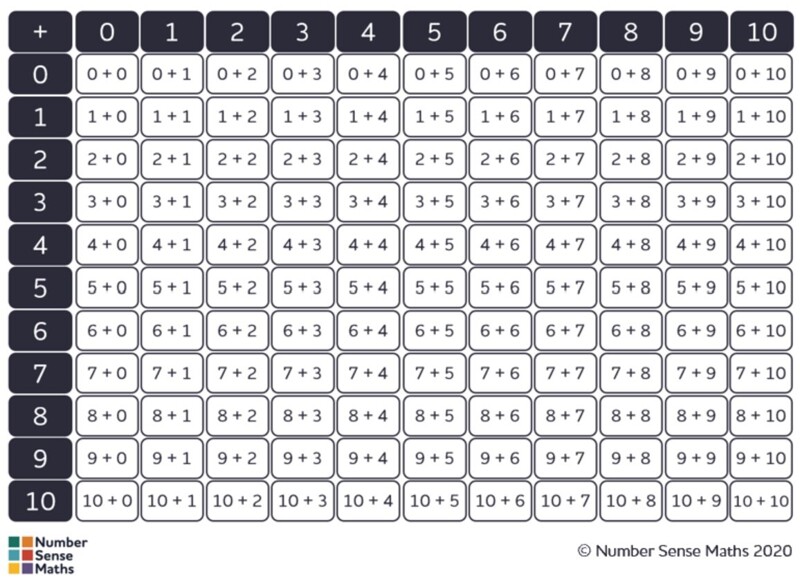
In Year 1 and 2, we teach daily 10-minute Number Sense sessions. The Number Facts Fluency programme helps children build a deep understanding of number by using visual graphics, animations, and practical activities that reveal mathematical structures and strengthen their natural ability to process quantities.
Informed by research into young children’s mathematical development, more than a decade of classroom practice, and lesson observations in Shanghai, the programme is built around a clearly defined set of essential addition and subtraction facts, known as the Fact Grids—similar to times tables, but for addition and subtraction.
These core facts are taught alongside 12 key calculation strategies that help children understand number relationships and learn how to use known facts to work out new ones. Modelled on the systematic structure of phonics teaching, the programme leaves nothing to chance, offering a fully resourced six‑stage scheme of work with step‑by‑step teaching guidance, classroom and home activities, animations, and scaffolded exercises that support children, teachers, and parents at every stage of learning. Click to find out more: Addition and Subtraction Fact teaching | Number Sense Maths
RWI Phonics Virtual Classroom
Across every class, we are now using the Read Write Inc. (RWI) Phonics Virtual Classroom videos to help children build confidence and fluency in reading. These short films give children the chance to practise the sounds, blending skills, and reading strategies they learn in phonics lesson, in a fun, clear, and consistent format they can also revisit at home. Please remember to access these videos at home as well.
Handwriting
We use the Read Write Inc. handwriting approach, which helps children learn to form letters correctly and develop fluent, confident writing through clear, engaging teaching. Children begin in Reception by learning how to hold a pencil comfortably and form letters using simple, memorable cues. As they grow more secure, they progress into ‘Letter Village’, where new animated films and visual stories guide them in forming letters that will eventually flow into joined handwriting. Each short film builds on the last, giving children daily practice and allowing adults to give more attention to those who need support. The programme is fully structured in stages, helping children move from basic letter formation to joined writing and increased fluency in a way that is enjoyable, consistent, and designed to boost their confidence.